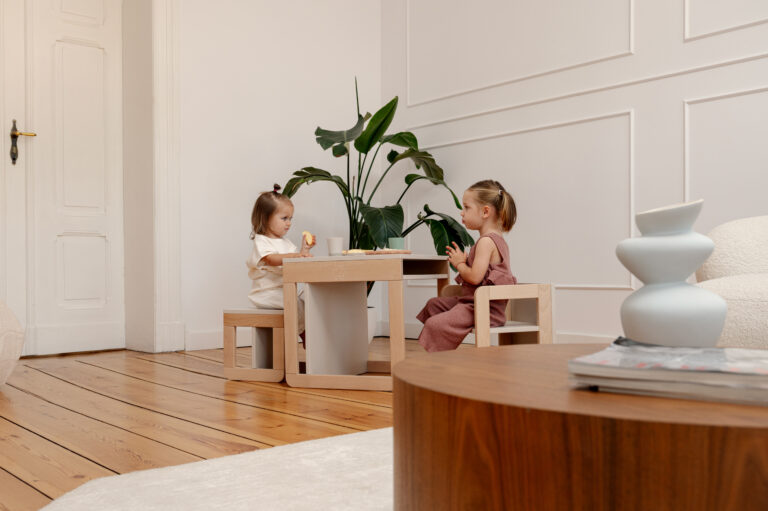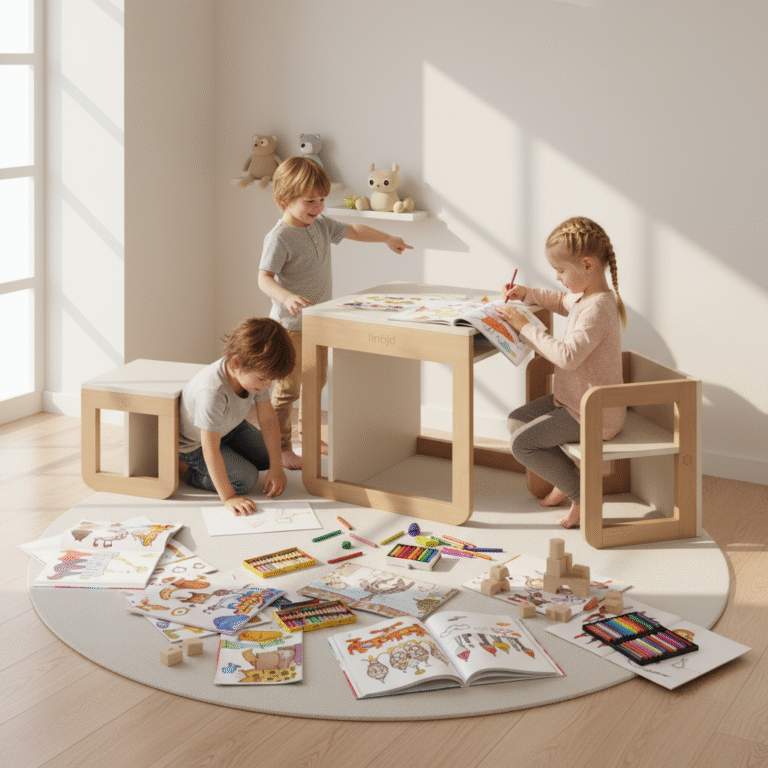
It’s not about toys or trips to entertainment centers. It’s about simple, warm moments that repeat – like having tea with mom at the same table, or evening story time in the corner where the favorite blanket always lies.
Childhood isn’t a collection of random events – it’s a rhythm that builds calm. Rituals are to a child what a frame is to a painting – they give meaning, security, and a place in the world.
What are rituals, and how are they different from routines?
Rituals are repeated actions that carry emotional meaning. They can be simple, but they’re done with awareness and the intention of closeness.
For example: brushing teeth every night is a routine. But if you always sing a song together afterward – that’s already a ritual.
Routine = function
Ritual = relationship + emotion
Why do children need rituals? (based on developmental psychology research)
Psychologists such as Dr. Laura Markham and Dr. Daniel Siegel highlight that rituals:
Build a sense of security
- Children between 2–6 years learn about the world through repetition. Predictable points in the day help them anticipate what’s next – which creates peace and stability.
- “When I know what’s coming, I feel safe.”
Strengthen the parent–child bond
- For a child just learning to speak, the simple fact of sitting down with you at the same time each day is a language of love.
- A ritual says: “I am here with you. You can count on me.”
Support emotional and cognitive development
- Help children regulate emotions (because the world becomes more predictable)
- Strengthen focus, patience, and the ability to recognize patterns and needs
How to bring rituals into daily life with a young child (ages 2–6)
- Start with a morning or evening ritual – these are the most powerful anchors.
- Repeat it – even if your child doesn’t show excitement. Consistency builds trust.
- Give it a name – children at this age love familiar “games” and repeated patterns.
- Root the ritual in a place – for example, the Møb 9-in-1 table can become its natural center.
Examples of age-appropriate rituals:
Ages 2–3
- “Cocoa & a song” – after breakfast at their own little table
- “Evening drawing” – a few calm minutes of drawing after bath time
Ages 4–5
- “My question of the day” – parent and child ask each other something at mealtime
- “Memory notebook” – once a week you write or draw something together
Age 6
- “Time with mom/dad” – sharing a cup of tea together
- “Reflection time” – a daily question: “What was the best part of today?”
Møb 9-in-1 – a piece of furniture that supports rituals
Møb 9-in-1 is more than furniture – it’s a space that helps organize a child’s everyday life between ages 2 and 6.
Thanks to its modular design and timeless look, it fits into every part of the day:
- at the table – family meals
- in the kitchen – cooking together, helping out
- in the reading corner – stories and drawing
- in the evening – a steady spot for winding down
For the child, it becomes “my place.” For the parent, it’s a tool to nurture connection and calm.
Closing thought: Children remember rituals, not things
In a world full of stimulation, a ritual is like a soft anchor.
It’s not objects that shape childhood – it’s the moments that return again and again, full of love and rhythm.
Møb 9-in-1 can be the frame for those moments – shared, repeated, and meaningful.