A two-year-old saying “go away!”, a three-year-old insisting “me, myself!”, a five-year-old getting frustrated when we try to help. What do all these moments have in common? A child’s deep need to feel capable.
And to feel that you believe in them.
Independence at ages 2–6 is not a luxury – it’s a fundamental part of development. The way we respond as adults can either support or hinder their sense of competence, agency, and security.
What does a child truly need in order to become independent?
Not control. Not constant supervision. Not praise for every little thing.
But rather:
- space
- clear boundaries
- recognition of their effort
- real, everyday tasks
As Maria Montessori said:
“Every unnecessary help is an obstacle.”
Stages of independence (ages 2–6) – what to expect

Ages 2–3
- strong desire to “do it myself” (though not always successful)
- exploring through climbing, pushing, touching
- responds to rituals: “my spoon,” “my plate,” “my table”
Ages 4–5
- growing precision in movements, eagerness to help
- able to dress themselves, set the table, sort toys
- “pride in competence” emerges – an important developmental emotion
Age 6
- beginning of planning and anticipating
- can take responsibility for chores, daily planning, helping younger siblings
- strong need for fairness and trust
5 Everyday Ways to Foster Independence
- Make space accessible
A table, a chair, a step stool, a snack shelf – if a child has to ask for everything, they don’t learn to act on their own.
- Offer small choices
“What would you like on your sandwich?”
“Which pants do you want to wear today?”
Small decisions = a big sense of agency. - Don’t rush to correct
If your child sets the table “crookedly,” resist fixing it right away. Supporting the process matters more than achieving a perfect result. - Involve them in real tasks
Children don’t need “pretend” chores. Let them:- pour their own water
- wash a vegetable
- clean up their own space
- Acknowledge the effort, not just the outcome
Instead of “Great job!”, try:
“I noticed you poured the water yourself and didn’t spill. That was careful.”
Or: “It was hard, but you didn’t give up.”
Independence doesn’t mean being left alone
Supporting independence doesn’t mean leaving your child to manage everything by themselves. It means:
- being nearby
- observing patiently
- accepting frustration
- trusting that they can handle it, if you let them
Møb 9-in-1 – a space for independence
Møb 9-in-1 is more than furniture. It’s a space for:
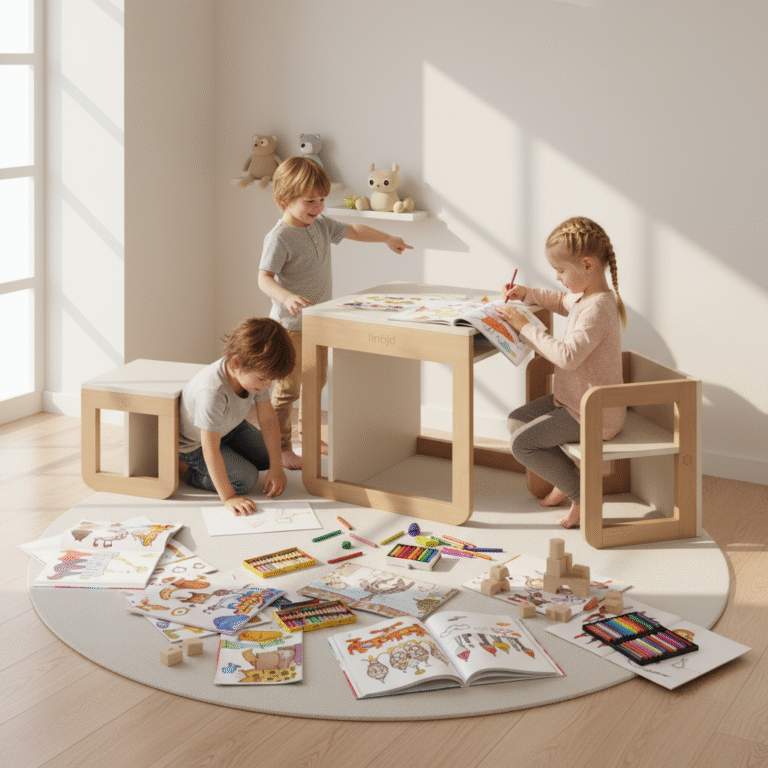
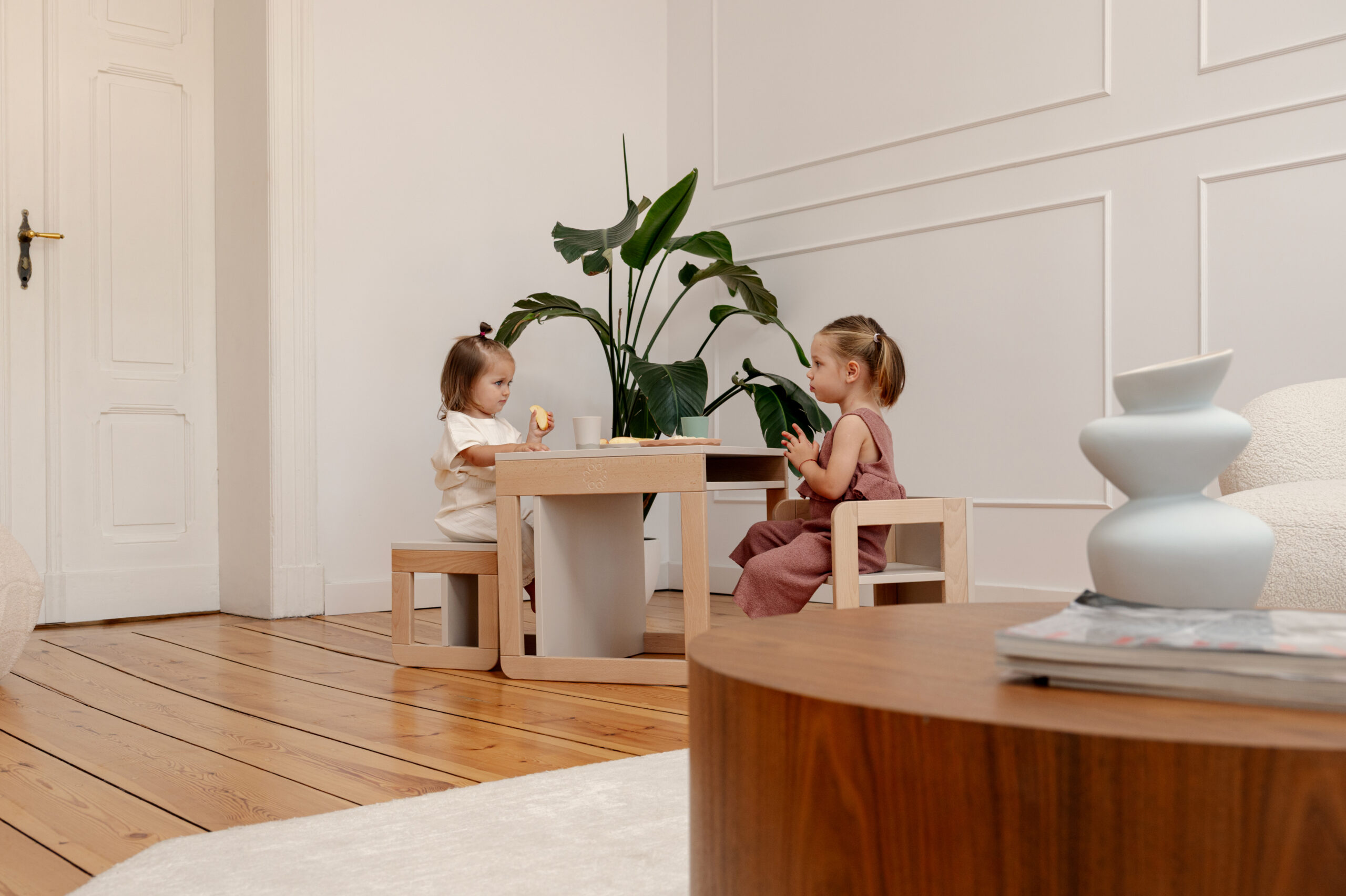
- sitting at the table on their own
- preparing meals alongside a parent
- learning, drawing, and organizing “my place”
Children grow. And they should grow in an environment that doesn’t limit them, but invites them to act.
Final thought: Your attention = their agency
Your child doesn’t need you to do everything for them. They need your trust in their ability.
Every “I can do it myself” is a step toward confidence, competence, and a healthy relationship with the world.
Møb 9-in-1 was created for exactly that – to turn everyday moments into lessons in independence.